
Can Online WHS Training Replace Face-to-Face Training?
Learn when online WHS training works well, when face-to-face or practical instruction is needed and why blended learning is often the strongest approach.

Learn when online WHS training works well, when face-to-face or practical instruction is needed and why blended learning is often the strongest approach.

Discover five signs that workplace induction content needs updating and how to keep safety information accurate, relevant and suitable for today’s workplace.
Refresher training should have a reason A completion certificate should not mark the end of workplace safety training. Knowledge fades,
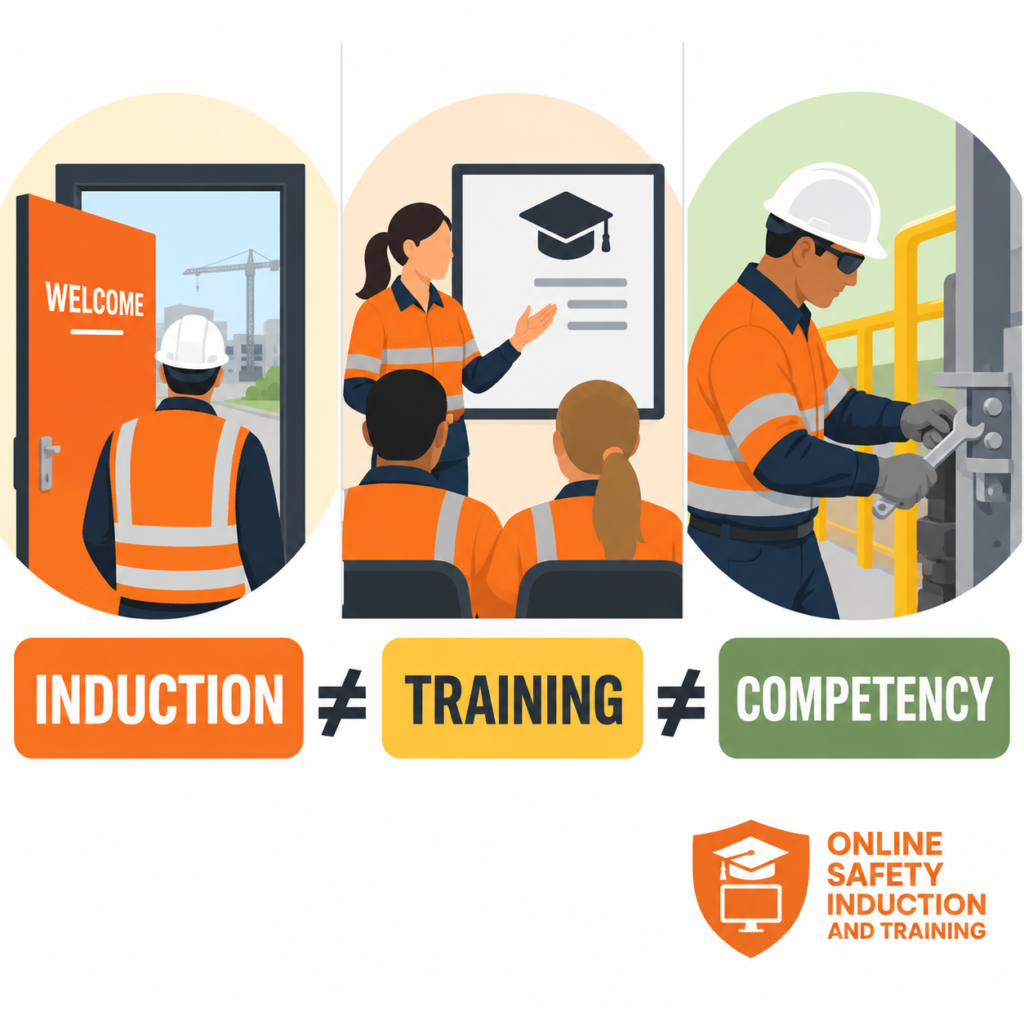
Three terms that should not be treated as interchangeable Safety induction, workplace training and competency are often grouped together. They

A genuine question can open an important conversation R U OK? Day is held on the second Thursday of September.

If you operate a business in Australia, you’ve likely heard the term “harmonised WHS laws.” However, here’s what many businesses
Trying to understand the Work Health and Safety (WHS) Act can feel like reading a legal textbook written for lawyers,

Many businesses assume Contractors and Labour Hire workers manage their own WHS training, however that assumption creates risk and regulators

Australian WHS legislation consistently refers to an employer’s duty of care to provide information, training and instruction. These words are

Australian WHS law does not contain a single “mandatory training list.” Instead, businesses must identify the training their workers need